
Seoulista Beauty
Digital Campaign · Motion Design · Product Communication
Seoulista Beauty's Cryo Cool Tool® introduced a new product category that combined a reusable device with skincare treatments. While the concept was innovative, the relationship between the two products was not immediately clear to customers.
Challenge
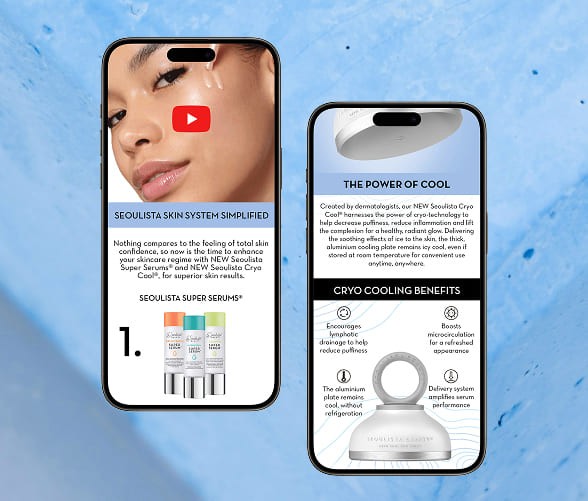
The product relied on technical features and usage instructions that risked feeling overly clinical. Customers needed to quickly understand how the device and serum worked together and why the combination was beneficial.
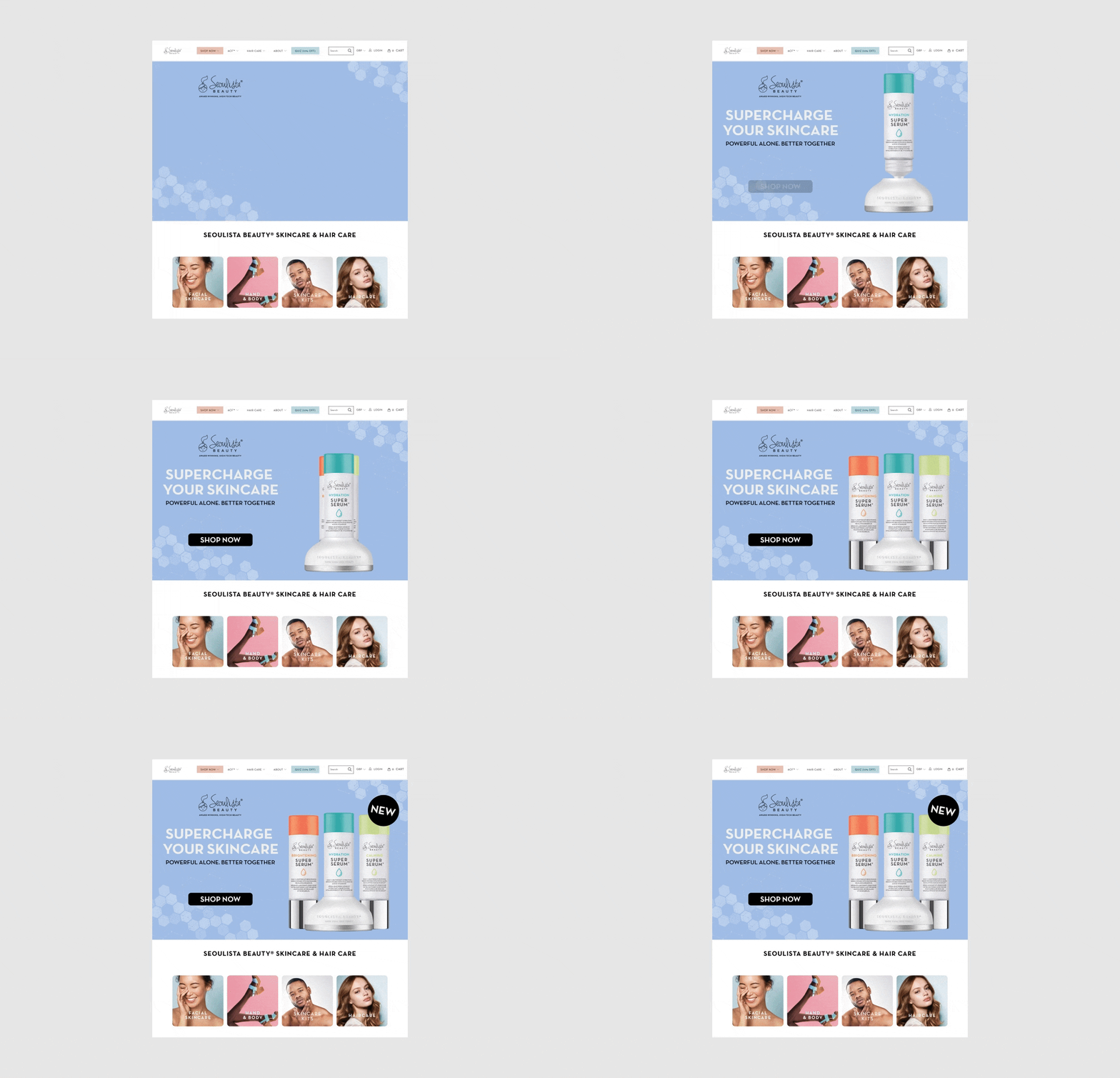
Campaign System
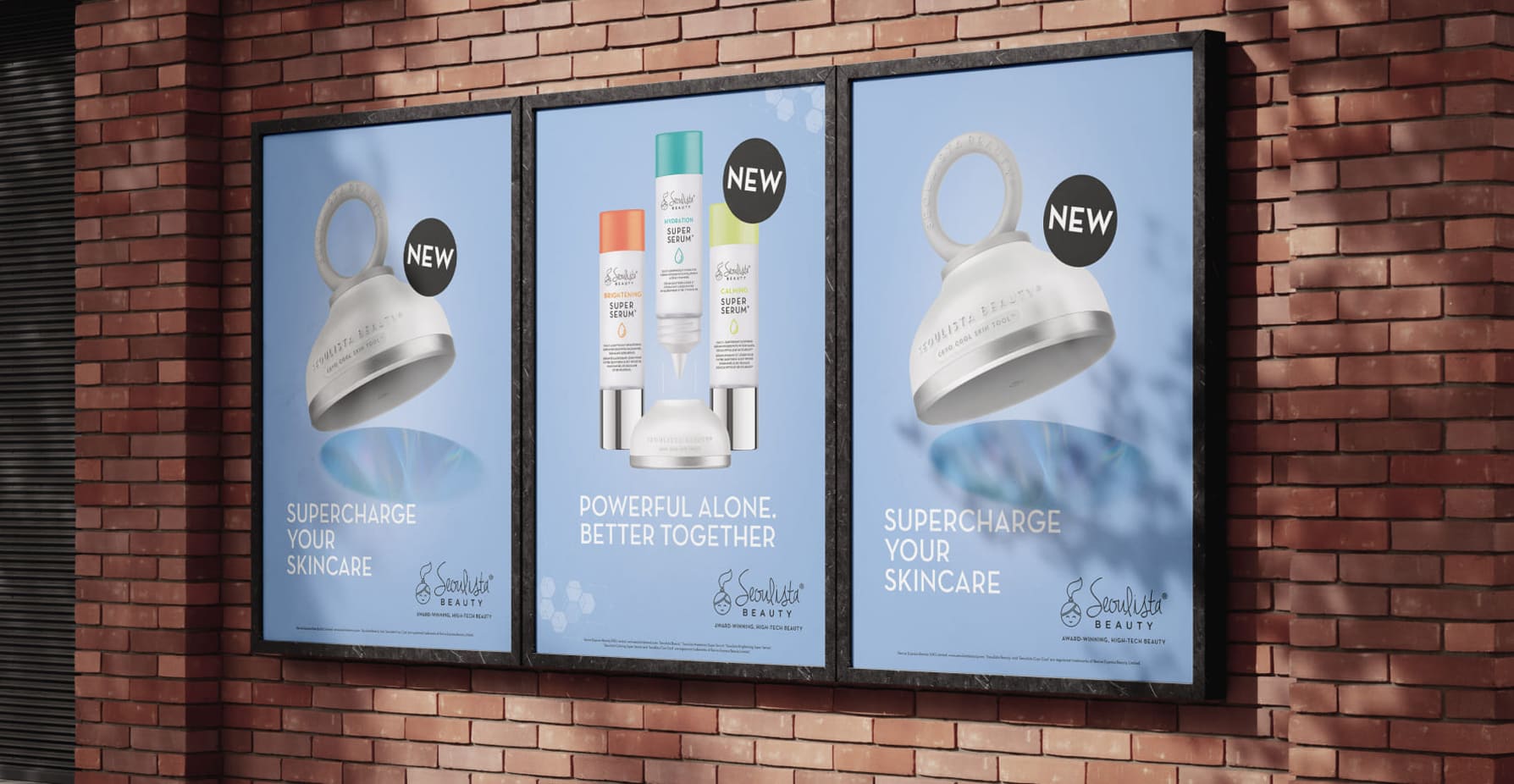
I developed a minimal visual language that simplified product communication and focused on the customer experience rather than the underlying technology.
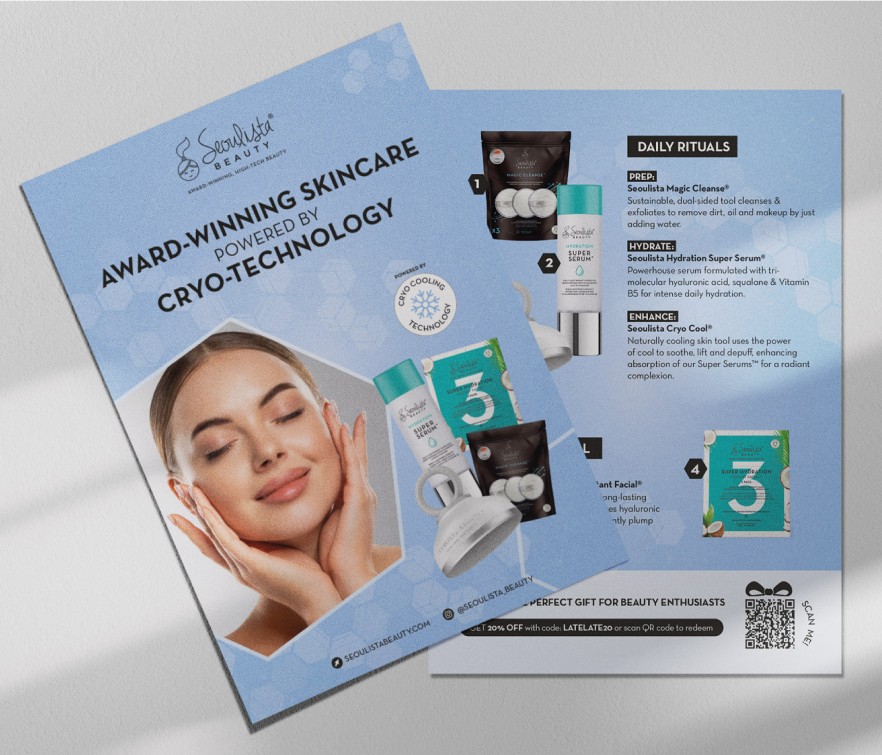
Motion design was used to demonstrate how the device and serum interact, helping customers understand the product journey at a glance. Across campaign assets, the two products were presented as a single ritual rather than separate purchases, creating a more cohesive and approachable story.
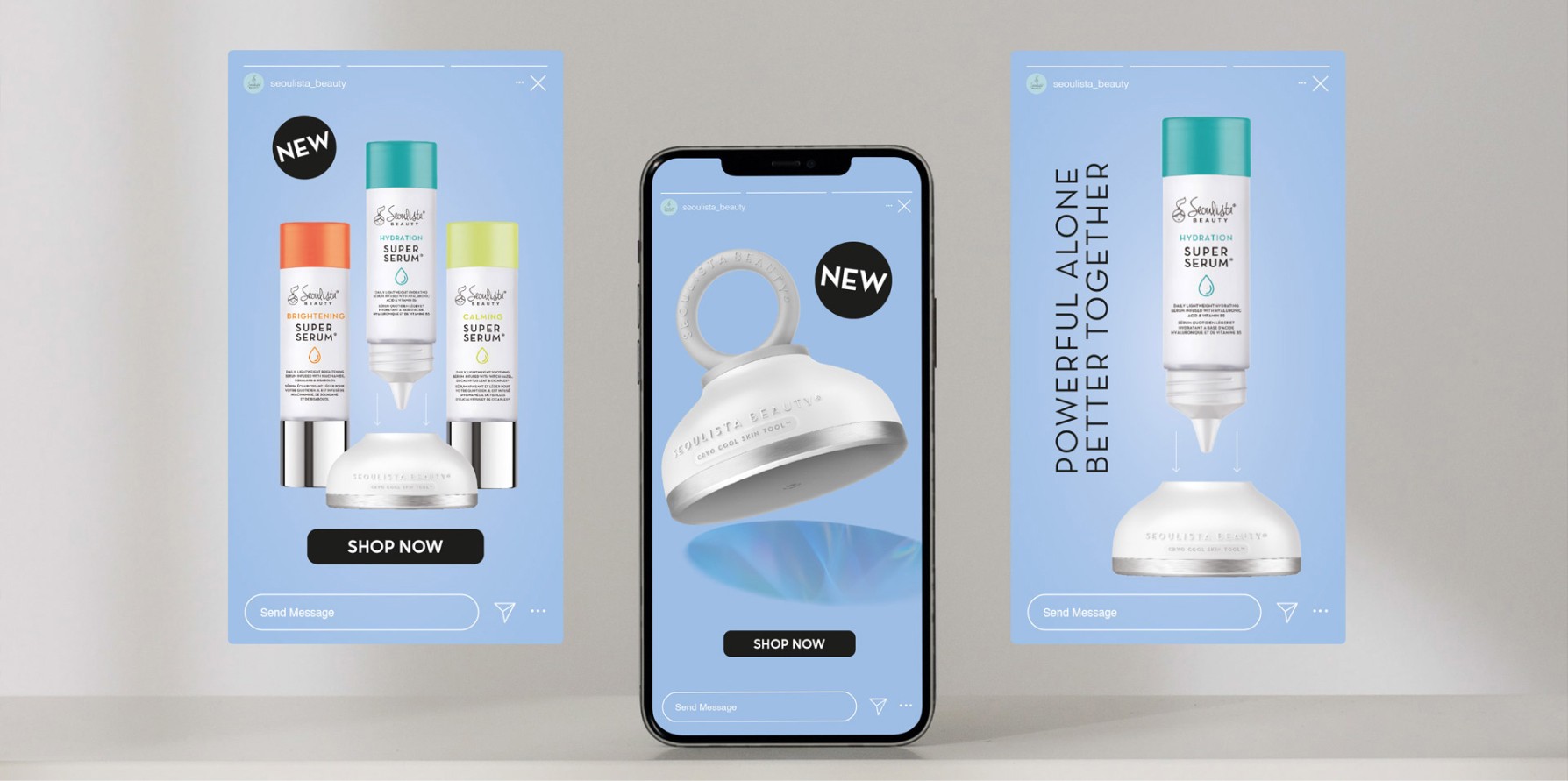
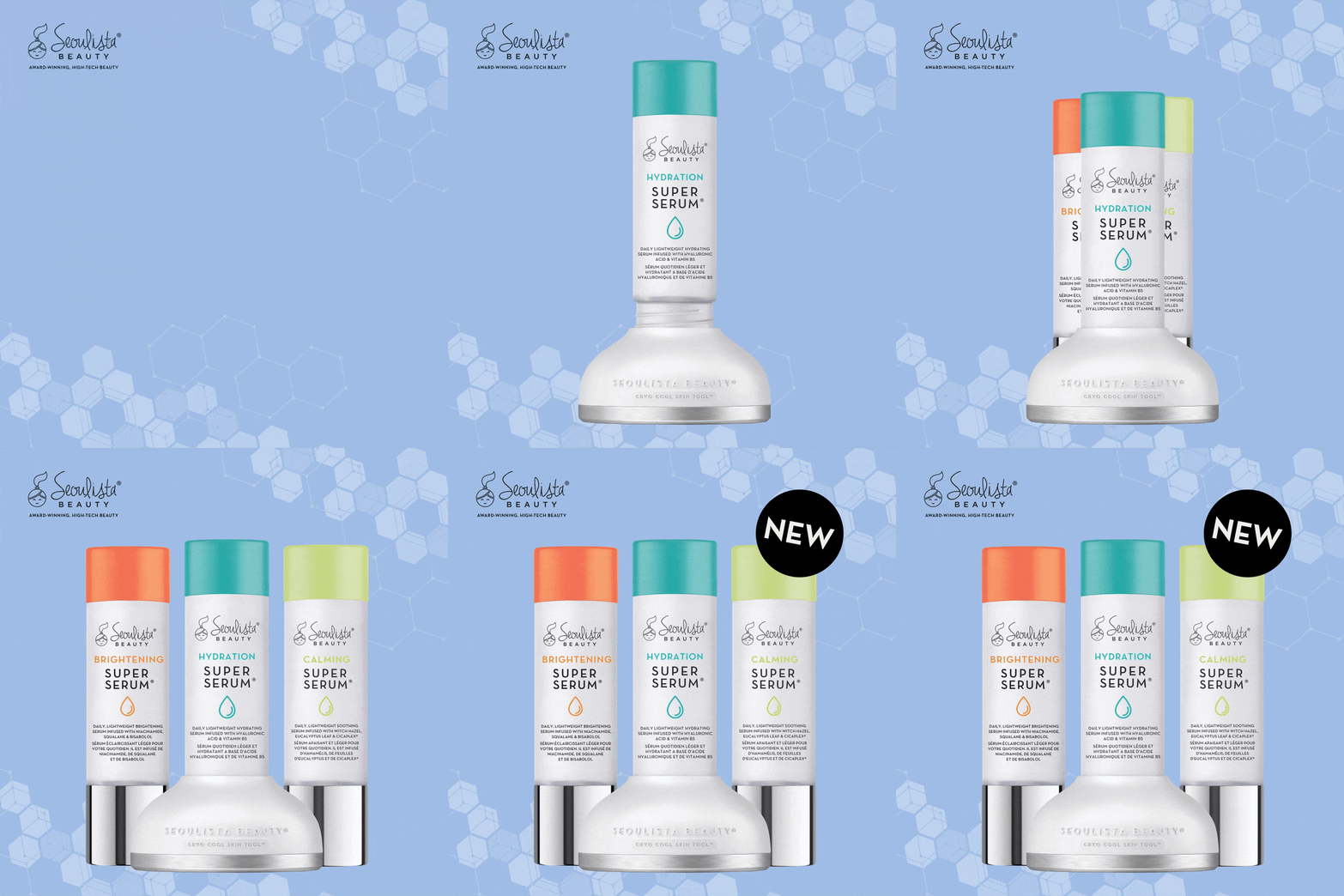
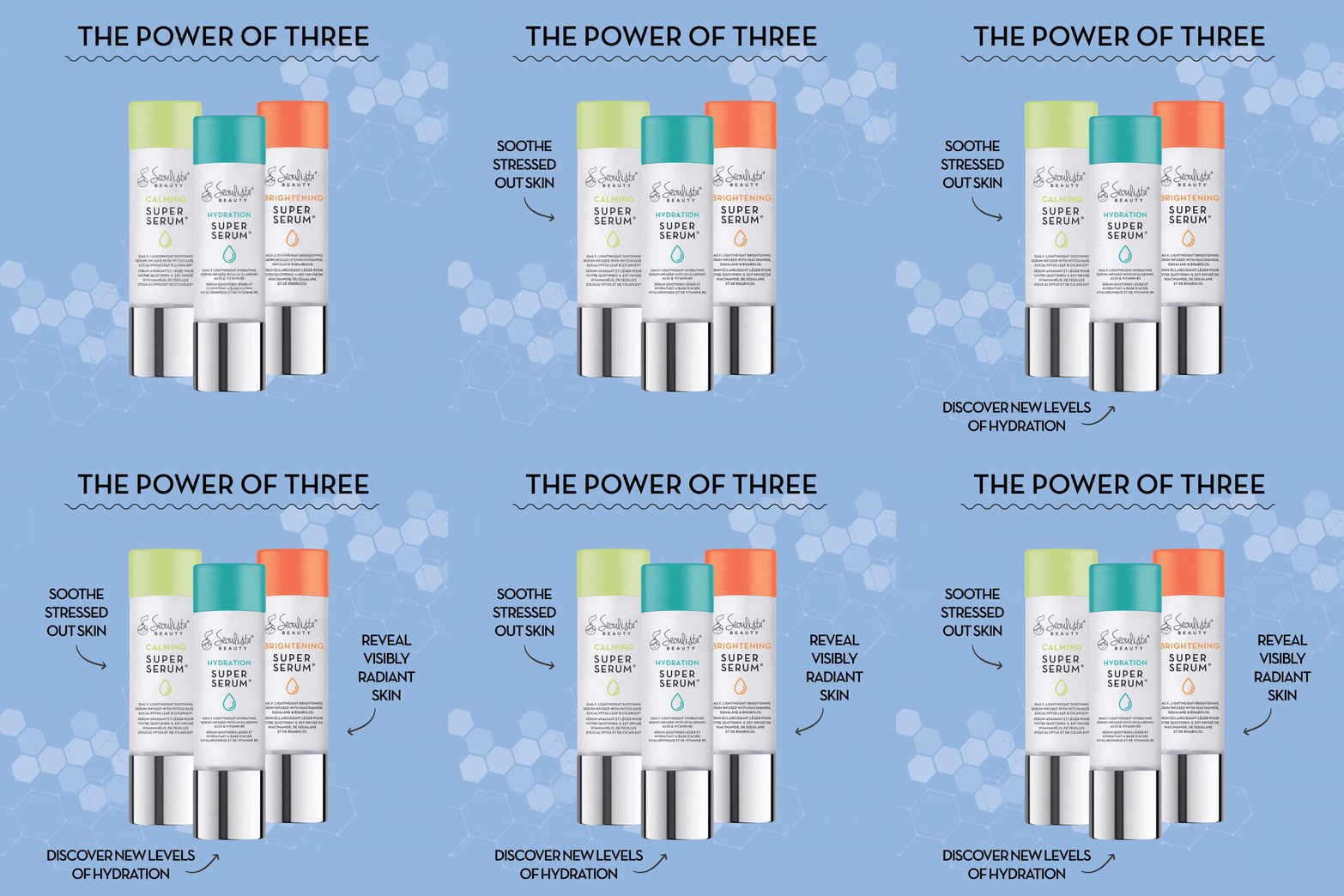
Outcome
The campaign improved understanding of how the product works while positioning the experience as part of a daily skincare routine rather than a technical procedure.
The result was clearer product communication and a stronger perception of the range as a connected system.